Fiber optic work leaves very little room for careless cable preparation. The fiber itself is delicate, and an unsuitable stripping method can damage the material before termination or splicing even begins.
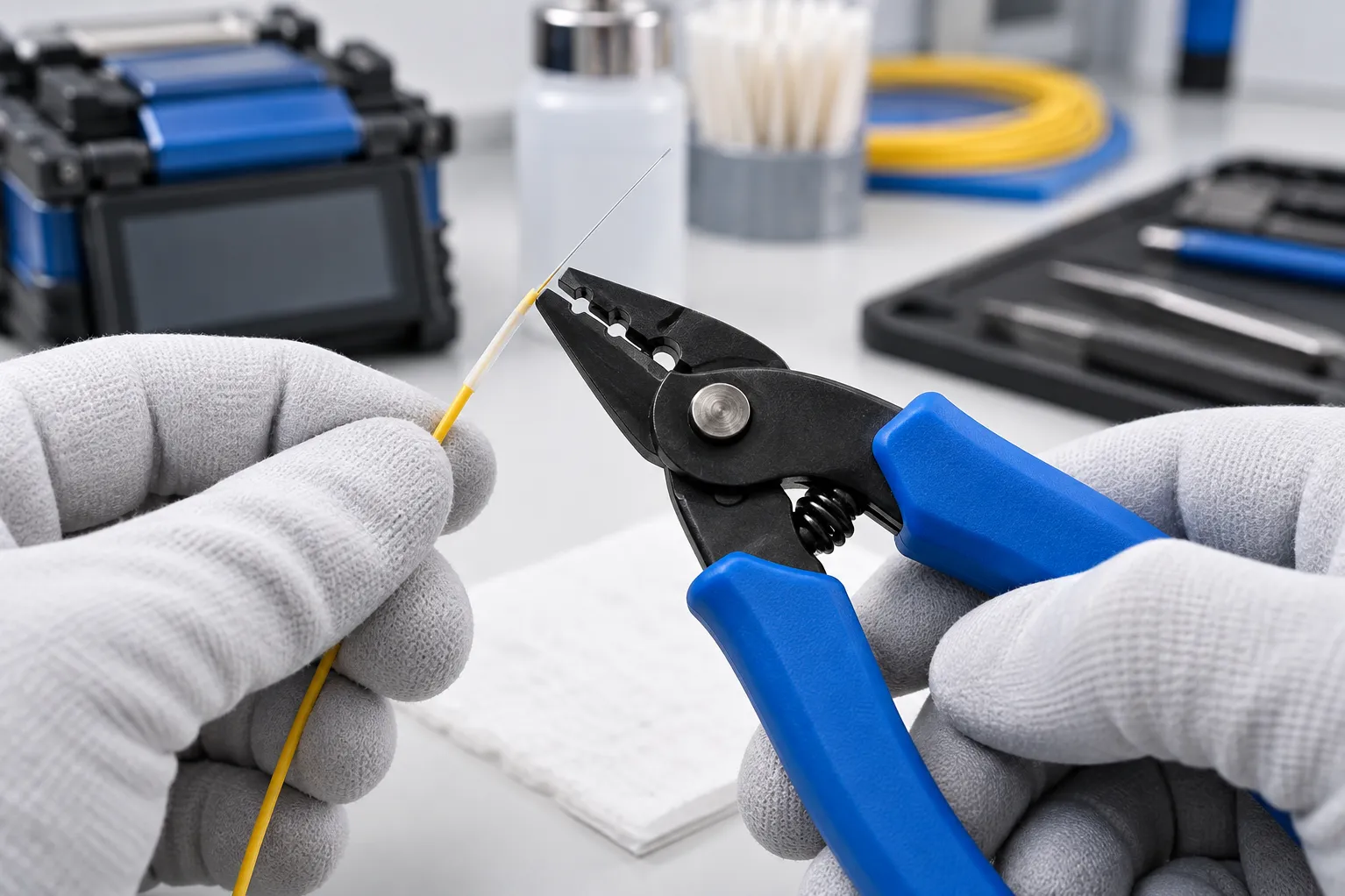
A Jonard Fiber Optic Stripper is designed for specialised fiber preparation tasks, helping technicians remove specified coatings or buffer layers when the correct model and technique are used. For telecom installers, network technicians and maintenance teams, the important point is not simply owning a stripper but matching it to the fiber construction being handled.
Why Ordinary Wire Strippers Are Not Enough
Copper wire and optical fiber have very different handling requirements.
A general-purpose electrical stripper may be suitable for conventional insulated conductors, but fiber preparation requires far greater control. Applying the wrong blade profile or excessive force can scratch, nick or break the fiber.
Damage may not always be obvious immediately. A technician can therefore lose time troubleshooting a connection when the real problem began during preparation.
Understand the Cable Construction First
Before selecting a fiber stripping tool, identify exactly which layer needs to be removed.
Depending on the cable and task, technicians may encounter:
- Outer jackets
- Buffer materials
- Coatings
- Strength members
- Individual fibers
- Different cable diameters and constructions
No single stripping operation should automatically be assumed suitable for every fiber cable.
The manufacturer’s specifications for the particular stripper and cable should guide tool selection.
Technique Makes a Major Difference
A quality stripper cannot compensate for rushed preparation.
Technicians should position the fiber correctly, use controlled pressure and pull in the appropriate direction. Repeatedly twisting, bending or aggressively pulling the fiber can introduce unnecessary risk.
Cleanliness is equally important.
Fiber preparation work should be performed in a controlled area where debris can be managed properly. Small fiber fragments need careful handling because they can be difficult to see and potentially hazardous.
Where Fiber Stripping Tools Are Commonly Used
Professional fiber preparation tools can support work involving:
- Telecom installations
- Data networks
- Fiber distribution systems
- CCTV and communication infrastructure
- Data centres
- Network maintenance
- Fiber splicing preparation
- Field repair work
In Delhi NCR, these requirements can arise across office developments, industrial facilities, telecom projects, commercial properties and network infrastructure work.
Contractors handling multiple sites often benefit from standardising their fiber preparation tools so technicians are not improvising with unsuitable cutters or generic strippers.
Keep the Tool in Suitable Condition
Fiber stripping performance depends partly on blade condition and tool cleanliness.
Residue should not be allowed to build up around stripping surfaces. The tool should also be protected during transportation, particularly when technicians carry equipment between project sites.
If stripping suddenly becomes inconsistent, technicians should inspect the tool and confirm that the fiber being handled still matches its intended specification rather than simply applying more pressure.
A Practical Buying Approach
When purchasing a Jonard Fiber Optic Stripper, ask three questions:
- What exact fiber or cable construction will be prepared?
- Which layer needs to be removed?
- Which Jonard model is specified for that task?
Those questions are far more useful than choosing solely by appearance or price.
Miracle Tools And Tackle LLP serves professional tool users from New Delhi and the wider Delhi NCR region. For telecom contractors and network teams evaluating Jonard fiber preparation equipment, supplying the exact cable and application details can make product selection more precise.
Clean fiber preparation starts before the splice or connector is made. Using the correct stripper with disciplined technique helps create a better foundation for the work that follows.
Keywords