Network technicians can lose surprising amounts of time when essential tools are scattered across separate cases or missing when they reach a site. A prepared toolkit can simplify installation and troubleshooting, but only when its contents match the type of network work being performed.
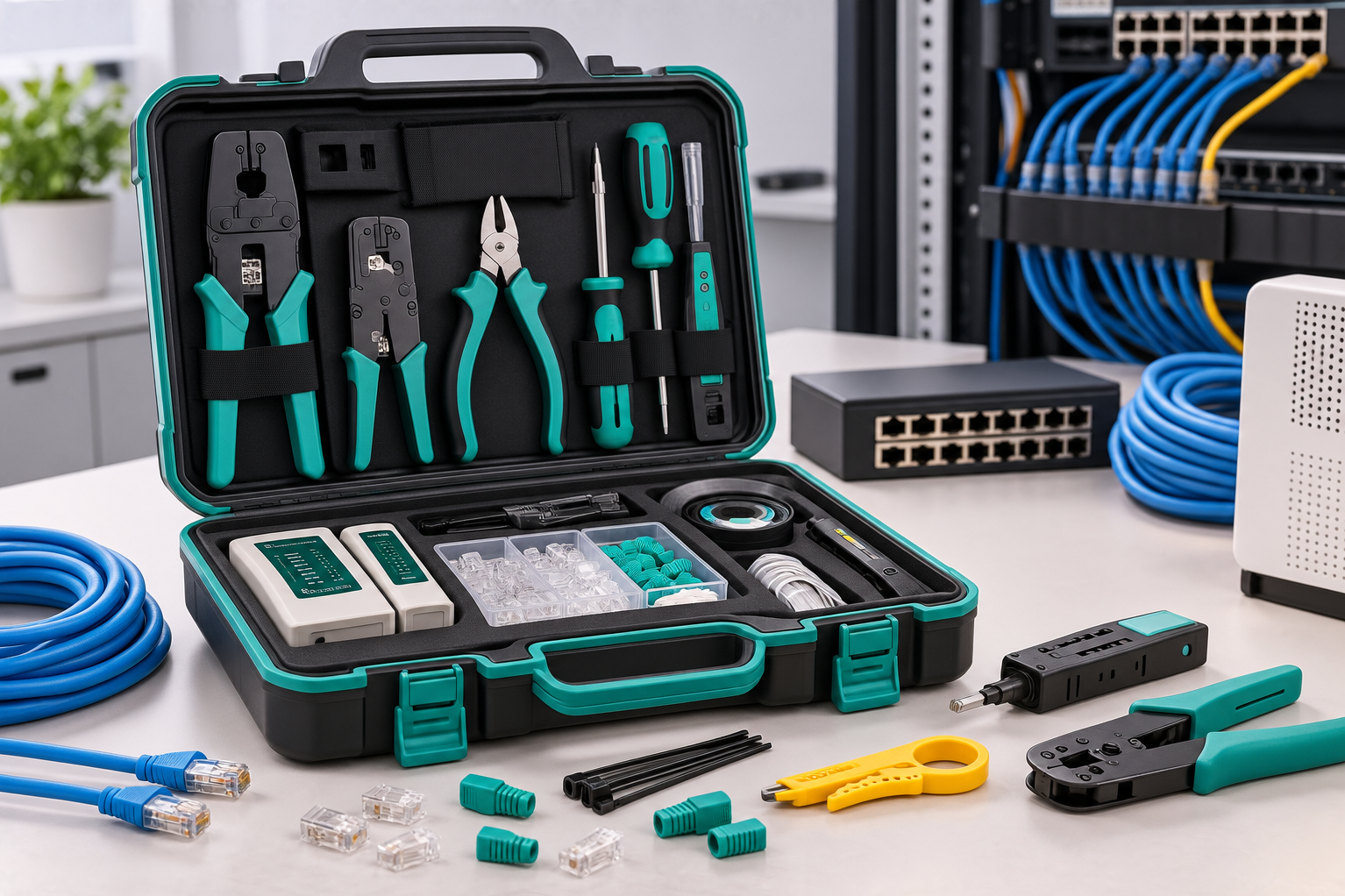
A Pro’sKit Network Tool Kit can be a practical option for technicians involved in structured cabling, telecom maintenance and network installation. The key is to compare the kit contents against actual job requirements instead of assuming every network toolkit contains the same equipment.
Define the Technician’s Work First
Start by identifying the tasks performed most often.
A technician may need equipment for:
- Cable preparation
- Modular connector work
- Punch-down termination
- Cutting and stripping
- Network testing
- Screw fastening
- General installation
- Connector inspection
- Basic maintenance
A field technician working primarily on copper structured cabling may need a different kit from someone servicing mixed telecom and fiber infrastructure.
Complete Kits Can Reduce Tool Management Problems
Buying individual tools provides flexibility, but it also creates procurement and organisation challenges.
Individual purchasing can result in mismatched quality levels, duplicated tools or missing essentials. A properly selected kit can give technicians a defined set of equipment in organised storage.
This can be especially useful when companies issue standard kits to several field engineers.
Miracle Tools And Tackle LLP lists multiple Pro’sKit electrical and network-related tool kits, including professional telecom and network installation options, illustrating why buyers should compare exact kit configurations rather than purchasing by brand name alone.
What Should Buyers Compare?
Tool contents
Request the exact list of included tools. Product photographs are not enough.
Cable compatibility
Check whether the cutting, stripping, crimping and termination tools support the cable and connector systems used by your team.
Testing requirements
Determine whether the kit includes the type of tester required or whether specialised testing equipment must be purchased separately.
Storage
A well-organised case makes missing tools easier to identify and protects equipment during transportation.
Replacement availability
Frequently used components eventually wear. Procurement teams should consider whether replacement blades, testers, crimpers or other items can be sourced individually.
Avoid the “More Pieces Means Better” Mistake
A 50-piece kit is not automatically more useful than a 20-piece kit.
A large kit may contain numerous items that technicians rarely use, while omitting one specialised tool needed on almost every project.
Evaluate relevance rather than quantity.
Ask field staff which tools they use every week, which ones are repeatedly borrowed from other teams and which missing items regularly delay work.
Those answers provide a stronger procurement specification than a simple piece count.
Why This Matters in Delhi NCR
Network contractors in Delhi NCR can work across offices, industrial premises, retail developments, institutional facilities, data infrastructure and large commercial projects.
Field teams may travel between Delhi, Gurugram, Noida, Faridabad and Ghaziabad, making portable organisation particularly useful.
A technician discovering a missing termination tool after reaching a project site can lose considerably more time than the value of the missing item itself.
Choosing the Right Supplier
For B2B procurement, product availability should be accompanied by clarity about model numbers and kit contents.
Miracle Tools And Tackle LLP operates from New Delhi and supplies professional tools for technical users across the region. When enquiring about a Pro’sKit Network Tool Kit, buyers should share the type of cabling, connectors and installation work involved so that the appropriate configuration can be evaluated.
A good network toolkit is not the one containing the most tools. It is the one that enables technicians to complete their routine work without unnecessary improvisation, missing equipment or repeated trips back to the workshop.
Keywords